
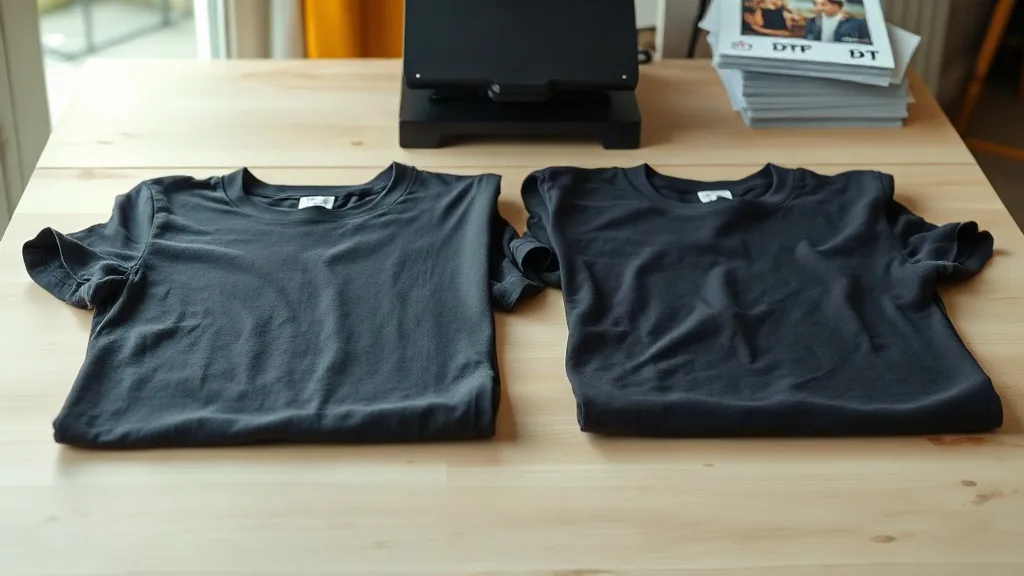
If you have spent any time sourcing blanks for DTF printing, you have probably noticed that the market is crowded with options that all claim to be "print-ready." Two names that come up constantly in small-shop circles are shaka wear and smart blanks. Both are popular, both are affordable, and both are marketed toward people who want to decorate garments without fighting the fabric. But they are not interchangeable, and choosing the wrong one for your project can cost you time, money, and a few ruined transfers.
This comparison is based on real-world use in a small print shop, not on spec sheets alone. I have run dozens of DTF transfers through both blanks, washed them repeatedly, and sold them to customers who are not shy about complaining. Here is what actually matters when you are deciding between these two.
Fabric and Hand Feel: The First Thing You Notice
Shaka Wear blanks tend to have a denser, heavier hand. The cotton is ring-spun and combed, which gives it a smoother surface than a standard carded cotton tee. That smoothness matters for DTF because the transfer adhesive needs a flat, lint-free surface to bond properly. On a rougher fabric, you get more texture showing through the print, and the edges of fine details can look slightly fuzzy.
Smart Blanks sit on the lighter side. The fabric is still soft, but it has a more open weave and a slightly airier feel. For summer drops or budget-friendly giveaways, that lighter weight is a genuine advantage. For DTF, however, the lighter weave means you need to be more careful with your pressing parameters. Too much pressure and you can push the adhesive into the fabric too deeply, which leads to a stiffer print and a higher chance of cracking after washing.
Which One Feels Better to the Customer?
That depends on your audience. If you are selling premium streetwear or heavyweight tees, Shaka Wear wins on perceived value. The fabric has a substantial drape that customers associate with quality. If you are printing promotional shirts, team uniforms, or budget retail, Smart Blanks feels perfectly acceptable and keeps your cost per unit down.
Fit and Sizing Consistency
One of the quiet frustrations of DTF printing is that a great print on a poorly sized blank still looks off. Shaka Wear runs true to size with a classic, slightly boxy cut that works well for unisex styles. The shoulder seams are consistent from piece to piece, which matters when you are pressing a stack of transfers and want them to line up the same way every time.
Smart Blanks also run true to size, but the cut is a bit more tapered. If your design relies on precise placement, like a chest logo or a small back hit, you will want to check the actual garment measurements rather than trusting the size label alone. In my experience, the variation between individual Smart Blanks pieces is slightly higher than with Shaka Wear, though still within acceptable retail tolerances.
How Each Blank Handles DTF Transfers
This is where the comparison gets practical. DTF transfers bond best to fabrics with a high cotton content and a smooth surface. Both blanks are cotton-heavy, but they behave differently under the heat press.
- Shaka Wear: The denser weave gives you a flatter press surface. Transfers adhere evenly, and the print sits on top of the fabric rather than sinking in. Fine lines and small text hold up well. Wash tests show minimal cracking after ten cycles when pressed at the recommended temperature.
- Smart Blanks: The lighter weave requires a slightly lower pressure and a careful pre-press to remove moisture. Once dialed in, the results are good, but the margin for error is smaller. Heavier pressure or too much heat can cause the adhesive to bleed into the fabric, which dulls the colors and stiffens the print.
If you are new to DTF, Shaka Wear is more forgiving. If you have your press settings dialed in and want to keep costs low, Smart Blanks is workable and, with practice, produces clean results.
Color and Print Vibrancy
Both blanks take color well, but the denser surface of Shaka Wear tends to make DTF prints look slightly more saturated. On lighter Smart Blanks, bright colors pop nicely, but dark prints can look a touch muted if the fabric underneath is not perfectly flat. This is not a dealbreaker, but it is something to consider if your design relies on high-contrast details.
Pricing and Value for Small Shops
Smart Blanks generally come in at a lower price point, which makes them attractive for high-volume orders or test runs. Shaka Wear costs a bit more per unit, but the difference is often offset by fewer misprints and a higher perceived value at retail. When you factor in the cost of a ruined transfer and the labor to re-press a shirt, the cheaper blank is not always the cheaper option.
For a small shop, the smart move is to keep both on hand. Use Shaka Wear for premium drops and designs that need sharp detail. Use Smart Blanks for budget-friendly runs, samples, and promotional work where the fabric weight is less critical.
Which Blank Should You Choose?
There is no single right answer, but there is a right answer for your specific situation. If your customers expect a heavier, premium feel and you want a blank that is forgiving on the press, go with Shaka Wear. If you are watching margins closely and your designs are not detail-heavy, Smart Blanks will get the job done without breaking the bank.
The best way to decide is to order a few of each, press the same transfer on both, and wash them side by side. That test will tell you more than any spec sheet. And once you find the blank that fits your workflow, stick with it. Consistency is what turns a hobby into a business.
Frequently Asked Questions
Can I use DTF transfers on both Shaka Wear and Smart Blanks?
Yes, both blanks are compatible with DTF transfers. Shaka Wear is more forgiving due to its denser weave, while Smart Blanks requires slightly more careful press settings to avoid adhesive bleed.
Which blank is better for heavyweight streetwear designs?
Shaka Wear is generally the better choice for heavyweight streetwear because of its denser fabric and boxier fit. It holds up well to repeated washing and gives prints a more premium look.
Do Smart Blanks shrink after washing?
Smart Blanks may shrink slightly after the first wash, as is common with cotton blanks. Pre-washing or accounting for minor shrinkage in your sizing is recommended, especially for retail orders.
Is Shaka Wear worth the higher price for DTF printing?
For many small shops, yes. The reduced risk of misprints and the higher perceived value at retail often offset the higher unit cost, especially for premium drops.
Can I mix Shaka Wear and Smart Blanks in the same order?
You can, but keep in mind that the two blanks have different fabric weights and fits. For a cohesive collection, it is usually better to stick with one blank per style or drop.